
Singapore Cantilever Racking – Maximize Storage Space
In Singapore, up to forty percent of warehouse floor space is inefficiently used because of inefficient storage design. Yet, a cantilever racking system can reclaim this space for more efficient use.
A cantilever racking system is a purpose-built solution for storing long, bulky, or awkward items. This includes timber, pipes, metal sheets, carpet rolls, and furniture panels. It uses upright columns anchored to heavy bases and modular arms that create open-front storage levels. The open-front design enables forklifts and handling equipment to access loads unobstructed.
Constructed from high-strength steel, these racks are available with epoxy powder-coat or hot-dip galvanizing for outdoor use. They can support heavy loads and tolerate frequent handling. The system’s adjustable arm spacing, varied arm lengths, and accessories like locking pins and protective caps enable businesses to customize layouts to fit exact product sizes.
In Singapore’s tight industrial sites and premium real estate costs, cantilever racking systems enhance storage density. They also boost warehouse https://www.ntlstorage.com/racking-system-heavy-loads and picking speed. This makes them a practical, robust solution that matches local logistics demands and supports long-term operational efficiency.
Highlights
- Cantilever racks recover floor area and speed up access to long items.
- Open-front design accelerates handling and simplifies warehouse organization.
- High-capacity steel racks with durable finishes.
- Arms and add-ons support customized layouts.
- Well-suited to Singapore’s dense warehouse environment and premium land costs.
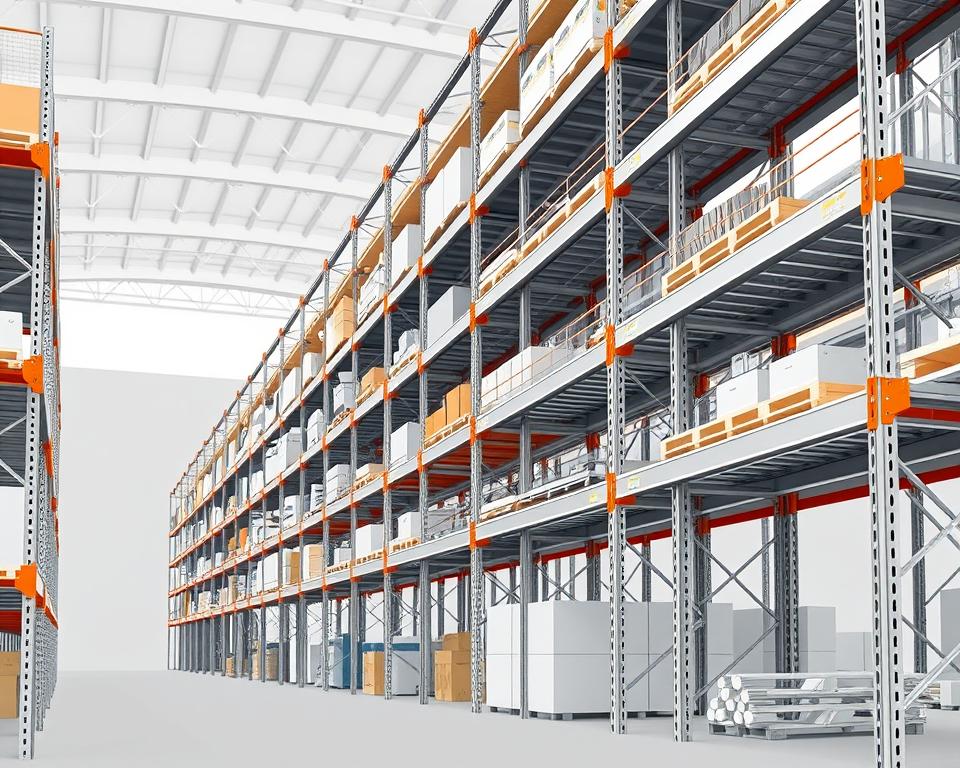
Why Cantilever Shelving Fits Singapore Warehouses
In Singapore, businesses contend with significant real estate costs and scarce floor space. Cantilever racking systems transform both horizontal and vertical areas into functional storage. This approach cuts the need for additional space, supporting faster warehouse organization and improved stock visibility.
High Land Costs and Space Constraints
Singapore’s land is at a premium, making every square meter valuable. Cantilever rack manufacturers engineer units that stack goods efficiently while removing front posts. This design shrinks aisle space, allowing for more storage of items like timber, pipes, and sheets per square meter.
Open-front design for unobstructed access to long items
The open-front design removes the need for front columns, accelerating loading and unloading. Forklifts and reach trucks have unhindered paths to each item. The result is faster picking cycles and clearer inventory views, enhancing efficiency in logistics and manufacturing.
Using Ceiling Height to Maximise Density
Many Singapore warehouses have high ceilings, ideal for vertical storage. Cantilever and heavy-duty racking systems utilize this space effectively. When combined with Very Narrow Aisle (VNA) workflows and specialized lift trucks, storage density improves while maintaining safety or access.
Industrial storage solutions based on cantilever systems adapt to business growth. Adjustable arms and modular designs allow easy reconfiguration for changing stock profiles. This approach supports cost control and enhances handling efficiency across various industries.
Types and Components of Cantilever Racking Systems
It’s important to understand cantilever rack types and components. Below is a quick guide to differences and safety-critical hardware for Singapore facilities. Use it to choose between structural heavy-duty and roll-formed options.
Structural cantilever versus roll-formed cantilever
Structural cantilever racks are crafted from structural steel, ideal for medium to heavy loads such as timber bundles and steel beams. On the other hand, roll-formed cantilever racking systems, made from flat-rolled steel, are suitable for light to medium items like plastic pipes and thin profiles. Choose based on inventory weight, handling frequency, and required lifespan.
Columns, Bases, and Anchoring
Upright columns come in various heights and capacities. Bases are heavy and must be anchored to concrete floors. Proper anchoring is essential to prevent tipping, which is more common with tall columns or when loads are off-center. Bracing and anchor bolts are vital for outdoor or high-wind locations. Cantilever rack manufacturers can specify column sizes and anchor patterns to meet local standards.
Straight arms and inclined arms: selecting by product shape
Straight arms are best for flat, square, or long boards like plywood and furniture panels. Inclined arms, on the other hand, angle upward to keep cylindrical goods from rolling. Items such as pipes, tubes, and PVC work well with inclined supports. End stoppers and anti-slip surfaces limit load movement, making loading and unloading more secure and faster.
Materials and Finishes Options
Powder-coated epoxy finishes provide a neat look and good corrosion resistance for NTL Storage racks. For humid or outdoor use, hot-dip galvanizing or specialised weatherproof coatings are recommended. High-strength steel construction boosts load capacity while maintaining the rack weight practical. Consult manufacturers on exposure to select the best material and finish.
| Part | Function | Typical Options | Ideal Application |
|---|---|---|---|
| Column | Primary vertical support | Roll-formed steel | Sized to bay load and height |
| Base | Stabilizes and anchors | Anchor bolts | Outdoor installations |
| Cantilever arms | Support goods horizontally | Straight arms | Pipes |
| Arm connectors | Lock arms in place | Bolts | High-vibration sites |
| Protectors | Protect against impact/abrasion | Plastic lining | Forklift handling areas |
| Coating | Protection and appearance | Hot-dip galvanized | Outdoor environments |
| Add-ons | Enhance safety and versatility | Back restraints | Organize mixed inventories |
Designing Heavy-Duty and Lumber Cantilever Racks
Effective design requires precise weight data and a clear handling strategy. Engineers must verify uniform distributed load (UDL) per arm and column when designing heavy-duty racking for timber, steel, or long profiles. This step is critical to avoid overloading and informs decisions on arms, columns, anchoring, and protective guards.
Planning Load Capacity and UDL
Cantilever arm ratings typically span from 1,500 kg to 3,000 kg per level as UDL. It’s essential to use measured bundle weights and stack patterns to establish safe limits. Structural calculations must detail UDL per arm, per column, and total bay capacity to meet Singapore building codes.
Selecting Arm Length and Column Height
Arm lengths should support product overhang and facilitate safe bundling. Column heights must align with handling reach and stacking objectives. If reach trucks or forklifts cannot access high levels, either reduce column height or widen aisles to keep throughput high.
Compatibility with forklifts, VNA trucks, and handling equipment
Design aisles and clearances around warehouse shelving systems to accommodate the lift trucks in use. Narrow-aisle or VNA layouts increase storage density, provided VNA trucks and operators meet operational and safety standards. Check turning radii, mast height, and load ergonomics before finalizing layouts.
Weatherproof and outdoor options for durable performance
For outdoor lumber storage racks and exposed installations, opt for galvanized finishes or weatherproof coatings. Consider drainage, UV exposure, and corrosion-resistant accessories. Robust bases and anchoring are key to mitigate risks from wind and wet-season conditions prevalent in Singapore.
Safety, Anchoring, and Compliance
Include anchoring specifications, brace sets, and protective guards in high-traffic areas. Ensure https://www.ntlstorage.com/cantilever-racking-system/ designs comply with workplace safety rules and local building regulations. Account for seismic and wind loading when sites or products require enhanced resilience.
Addressing these factors early prevents costly rework. Well-designed cantilever racking systems that align with loads, equipment, and environment offer safe, high-density storage while enabling efficient operations.
Customizable Racking Options and Accessories
Cantilever shelving is flexible to evolving inventory demands. In Singapore, storage teams can adjust to varying lengths and weights without a complete aisle rebuild. This flexibility ensures efficient handling of mixed-size loads while maintaining unobstructed pick paths.
Adjustable Arms for Variable Spacing
Arms on cantilever racking systems can be adjusted in fine increments. This feature allows precise control over layer spacing. Whether for thin sheets or long timber and pipes, staff can easily adjust as needed. It reduces the need for extra storage area.
Safety accessories: stoppers, caps, locking pins, and protective lining
Protective gear is essential for reducing product damage and ensuring safety. Removable stoppers prevent items from rolling off. Locking pins secure arms under load, while safety caps and rubber lining protect against impact and abrasion. These accessories are critical for any workplace prioritizing staff safety and asset protection.
Modular Layouts for Fast Reconfiguration
Modular cantilever designs allow quick reconfiguration and expansion. Options include boltless or bolted systems, allowing teams to easily modify aisles, arm profiles, or convert to single- and double-sided setups. This approach reduces lifecycle costs and supports scalable growth without significant capital investments.
Cantilever rack manufacturers provide a range of arm lengths, finishes, and mobile base systems. Integrating these options with existing shelving systems can substantially reduce wasted space and improve picking efficiency.
Applications and Industries Benefiting from Cantilever Rack Manufacturers’ Solutions
Cantilever racking systems are indispensable for many Singapore operations, storing long or oversized items. They save floor space and improve handling efficiency. These systems are well-suited for narrow aisles and high ceilings found in local warehouses.
Construction and building-material suppliers consider cantilever racks invaluable for storing timber, beams, plywood, and PVC pipes. These racks streamline picking for builders and distributors. They ensure projects on schedule and reduce damage to long loads.
Metal fabricators and manufacturers rely on steel cantilever racks for storing tubes, rods, sheet metal, and coils. The racks support heavy bundles and stabilize cylindrical stock with inclined arms. This setup enhances safety and workflow in fabrication and machine shops.
Furniture wholesalers, mattress distributors, and large-format retailers gain from open-front storage for bulky items and panels. The design enables easy loading and unloading for forklifts and VNA trucks. It leads to quicker order fulfilment and clearer inventory visibility.
Logistics centres and third-party warehouses use industrial storage solutions for irregular, non-palletised goods. Modular and mobile cantilever systems increase capacity in tight spaces. Some facilities achieve a significant increase in usable storage by switching to these systems.
Cross-industry benefits include adaptability to cold storage with suitable finishes and compatibility with handling equipment. These systems also allow easy reconfiguration as stock profiles evolve. Companies like renowned suppliers and leading manufacturers demonstrate how modular systems integrate with warehouse management to improve efficiency.
Planning and Installation Best Practices
Start with a thorough needs assessment, detailing product dimensions, weights, and handling equipment. This step is essential for cantilever rack manufacturers to suggest the right structural or roll-formed options. It also helps determine the load capacities needed. Also consider aisle widths, future growth, and the types of forklifts or VNA trucks used.
Design layouts that leverage vertical space to raise storage density. Opt for VNA aisles where feasible and align aisle widths with your equipment. Modular shelving systems enable easy adjustments as your business evolves. Adjustable arm placement accommodates various items like long timber, pipes, and sheet goods.
When installing, anchor heavy bases to concrete slabs and follow the manufacturer’s guidelines for bracing and locking. For outdoor or coastal locations, choose galvanised finishes and ensure wind-resistant anchoring. Include safety features like end stoppers, arm caps, and protective lining. Place guards in busy areas to prevent damage from impacts.
Train staff on load limits, stacking techniques, and equipment use. Regular inspections and maintenance are key to extending rack life. Collaborate with trusted cantilever rack manufacturers for engineering support, boltless assembly, and after-sales assistance. Monitor performance metrics to refine layouts and adopt mobile or dynamic storage solutions for seasonal demands or specific cold storage needs.
FAQ
Q: What is a cantilever racking system and what does it store?
A: A cantilever racking system is a specialized storage solution for long, bulky, or awkward items. It uses upright columns with projecting arms for open-front storage levels. Open fronts maximize space while keeping visibility clear and forklift access easy.
Q: Why are cantilever racks particular suited to warehouses in Singapore?
A: In Singapore, high real estate costs and dense industrial demand necessitate efficient space use. Cantilever racks boost storage density without enlarging the footprint. Their open-front design speeds up picking and handling, cutting costs under space and cost pressures.
Q: What components make up a cantilever rack?
A: The basic structure includes a central upright column mounted on a heavy anchored base. Cantilever arms are attached via pre-punched holes to create multiple storage levels. Systems come in single- and double-sided configurations, tailored to load and height requirements.
Q: What’s the difference between structural and roll-formed cantilever racks?
A: Structural cantilever is fabricated from structural steel for medium to heavy loads. Roll-formed cantilever is made from flat-rolled steel, suitable for light- to medium-weight goods. The choice depends on inventory weight, load profile, and required load capacity.
Q: How do I choose between straight arms and inclined arms?
A: Use straight arms for flat or non-rolling items. Inclined arms are better for cylindrical items to prevent roll-off. End stoppers and anti-slip arm surfaces improve safety for both types.
Q: What materials and finishes are available for cantilever systems?
A: Most systems use high-strength steel with epoxy powder-coated finishes for durability and aesthetics. Hot-dip galvanizing or weatherproof coatings are available for outdoor or humid environments. Choose finishes based on exposure, humidity, and handling needs.
Q: How do I read cantilever load ratings?
A: Capacities are rated per arm and column under UDL. Typical heavy-duty arm ratings range from 1500 kg to 3,000 kg per level. Exact values depend on arm length, column design, and anchoring. Accurate product weights and bundle dimensions are essential for engineering calculations.
Q: What anchoring and stability measures are required?
A: Heavy bases must be securely anchored to the slab. Brace sets, locking pins, and appropriate anchoring hardware are essential. Anchoring specifications should follow manufacturer guidance and local building codes.
Q: Can cantilever racks be used outdoors or in humid climates?
A: Yes—select hot-dip galvanizing or weatherproof coatings for humidity or outdoor exposure. Ensure robust bases and secure anchoring. Consider drainage, sun exposure, and corrosion-resistant accessories for long-term performance.
Q: How do these racks improve operations?
A: Open fronts remove obstructions so forklifts pick faster. Clear sightlines reduce search time. Customisable arm placement and modular layouts let warehouses adapt to mixed-size inventories, improving throughput and lowering handling costs.
Q: Will cantilever racks work with VNA trucks?
A: Yes—when designed with equipment compatibility in mind. Plan aisle widths, column heights, and arm placement to match forklifts, reach trucks, or VNA trucks. VNA integration can significantly increase storage density but requires compatible trucks and careful aisle and vertical planning.
Q: Which accessories should I add for safety?
A: Common accessories include removable stoppers to prevent roll-off, locking pins to secure arms, safety caps to reduce impact risk, protective plastic or rubber linings to prevent abrasion, and anti-slip arm surfaces. Protective guards in traffic areas and regular inspections further improve safety.
Q: How flexible are cantilever racks?
A: Arms reposition across heights to fit changing or seasonal stock. Modular boltless designs and mobile bases enable quick reconfiguration, expansion, or contraction of storage lanes, supporting evolving warehouse needs.
Q: What should a needs assessment include before buying cantilever racks?
A: Document product types, precise sizes/weights, bundles, equipment, aisle/turning needs, ceiling height, growth, and environmental factors. Provide these details to manufacturers for appropriate structural vs. roll-formed recommendations and UDL calculations.
Q: How do cantilever racks support different industries?
A: They’re versatile—construction stores timber and PVC; metal shops store rods/tubes/sheets; furniture/retail handle panels and bulky items. Logistics and wholesale operations gain faster picking and improved organisation for non-palletised loads.
Q: What are common customisable options from cantilever rack manufacturers?
A: Manufacturers typically offer adjustable arm lengths and profiles (straight or inclined), finish choices (powder-coating or galvanizing), single- or double-sided setups, modular boltless assemblies, mobile bases, brace sets, and specialised protective accessories. Suppliers also provide engineering guidance and load calculations.
Q: How should I plan layout to maximise vertical space in Singapore warehouses?
A: Match column heights to ceilings and select equipment with adequate lift. Consider VNA aisles and modular designs to pack more storage into the same footprint. Balance safe stack heights with reachable levels for available equipment.
Q: What maintenance should be scheduled?
A: Inspect anchors, arm alignment, protective linings, and any impact damage regularly. Verify locking pins and stoppers remain secure. Train operators on load limits and safe stacking. Promptly repair or replace damaged components to extend rack service life.
Q: What gains come from mobile bases?
A: Mobile/sliding bases remove permanent aisles, compacting rows and opening only where needed. This can increase usable capacity dramatically—sometimes by up to 80% compared to fixed racking in constrained spaces—when combined with careful planning.
Q: What regulatory and safety considerations apply in Singapore?
A: Designs must comply with local building and workplace safety codes, including anchoring, bracing, and guard requirements. Account for seismic and wind loads for tall or outdoor installations. Work with reputable manufacturers who provide engineering calculations and documentation for compliance.
Q: How do suppliers speed installation?
A: Reputable cantilever rack manufacturers offer boltless assembly options, pre-engineered components, and onsite installation teams. They provide engineering drawings, load calculations, and after-sales support to accelerate installation while ensuring safe anchoring and alignment.
Q: How do cantilever racks help control costs?
A: Maximizing space, speeding picks, and reducing damage all lower operating costs. Customisable layouts and modular designs allow businesses to adapt without major capital expense, increasing return on investment in tight industrial settings.